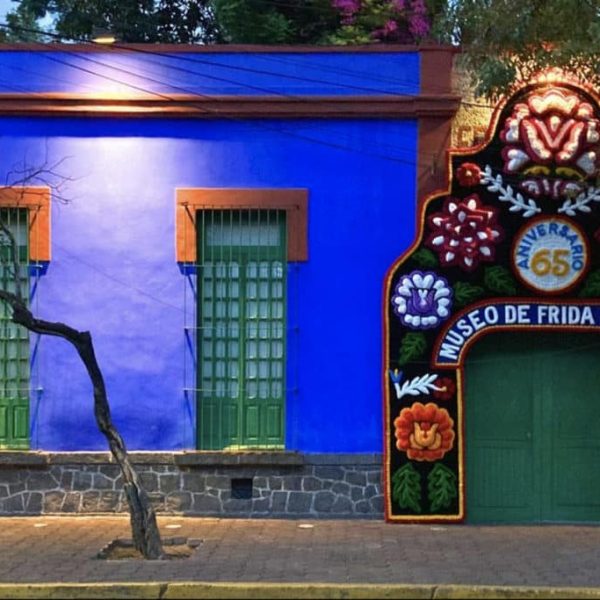
Step into the fascinating world of Frida Kahlo with a visit to La Casa Azul, her former home turned museum in Mexico City. From her most iconic works to the intimate details of her personal life, the Frida Kahlo Museum continues to inspire and captivate visitors from around the world.
Why Visit the Frida Kahlo Museum?
Visiting La Casa Azul offers a rare glimpse into the vibrant and deeply personal universe of one of Mexico’s most iconic artists.
Frida Kahlo lived much of her life in this blue-walled home, where art, history, and emotion are intimately intertwined. Here, you’ll begin to understand the depth of her work, so closely tied to her private struggles, passions, and convictions.
The museum displays not only her paintings but also personal belongings that reveal the story of her complex life with Diego Rivera. Each room, each object, reflects her lifelong pursuit of self-expression and independence.
What to See at La Casa Azul
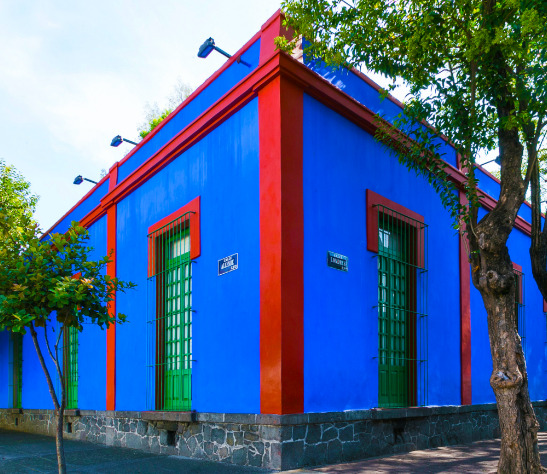
Among the highlights at La Casa Azul are iconic pieces like Viva la Vida and Frida y Diego Rivera.
Frida’s ashes are kept on-site, resting in a pre-Columbian urn, a powerful reminder of her enduring presence in the house. You’ll also find personal items such as her painted medical corsets, color palettes, and a collection of traditional Mexican dolls.
Her studio remains intact, complete with her easel and a carefully curated selection of brushes and tools.
🎟️ Important: tickets to the Frida Kahlo Museum should be booked online several weeks in advance, especially if you’re visiting on a weekend. Same-day tickets are rarely available, and walk-ins are almost never accepted.
If tickets are sold out or you’re looking for a different way to experience her world, consider the immersive exhibition Frida Kahlo: Biografía Inmersiva, a multimedia journey combining sound, light, and virtual reality.
📆 February to August 2025
🎟️ More info & tickets: fridakahloinmersiva.mx
Why Frida Kahlo Left a Mark on History
Frida Kahlo remains a powerful symbol of Mexican art and culture. Her life, shaped by both physical and emotional pain, deeply influenced her work.
Through her art, Kahlo explored complex themes such as identity, post-colonialism, gender, and social class. Her self-portraits, both intimate and radical, offer a glimpse into her inner world while addressing universal questions.
She challenged the norms of her time by expressing her suffering and personal experiences with honesty. This made her a feminist icon ahead of her time and a lasting source of inspiration for generations.
“I am not sick. I am broken. But I am happy to be alive as long as I can paint.” — Frida Kahlo
Key Works at the Frida Kahlo Museum
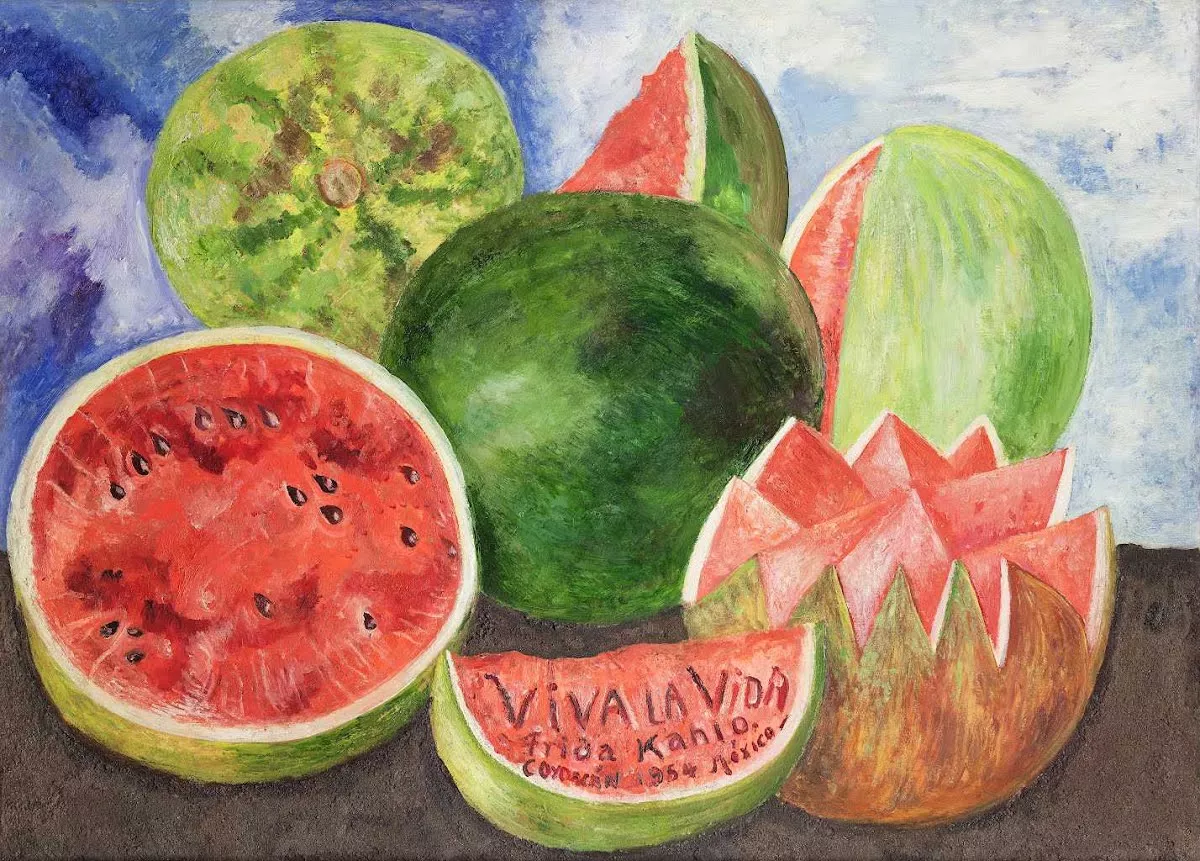
La Casa Azul, Frida Kahlo’s former home, holds several of her most powerful and personal works. Among them is Viva La Vida (1954), her final painting, a vivid tribute to life in spite of pain.
Frida y Diego Rivera (1931) captures her complex relationship with Rivera. Self-Portrait in a Velvet Dress (1926) was painted at age nineteen for her first love, Alejandro Gómez Arias.
These and other works reflect Kahlo’s unique world, blending deep personal emotion with the richness of Mexican culture.
Where Is the Frida Kahlo Museum?
La Casa Azul is located in the peaceful neighborhood of Coyoacán, in the southern part of Mexico City. Set at 247 Londres Street, this historic house is where Frida Kahlo was born, lived much of her life, and passed away. Today, it stands as a museum dedicated to her legacy.
Coyoacán’s cobbled streets and bohemian atmosphere echo the spirit of the artist. The museum is about a 20-minute walk from the Coyoacán metro station.
By car or Uber, expect around 20 minutes from Condesa or Roma Norte, and 30 to 35 minutes from Polanco, depending on traffic.
When to Visit the Frida Kahlo Museum
La Casa Azul, the Frida Kahlo Museum, is open from Tuesday to Sunday, between 10 a.m. and 6 p.m.
Visiting earlier in the week offers a quieter experience, allowing you to fully immerse yourself in Frida’s world without the weekend crowds.
Because entry is limited, booking in advance is essential.
Why Is It Called La Casa Azul?
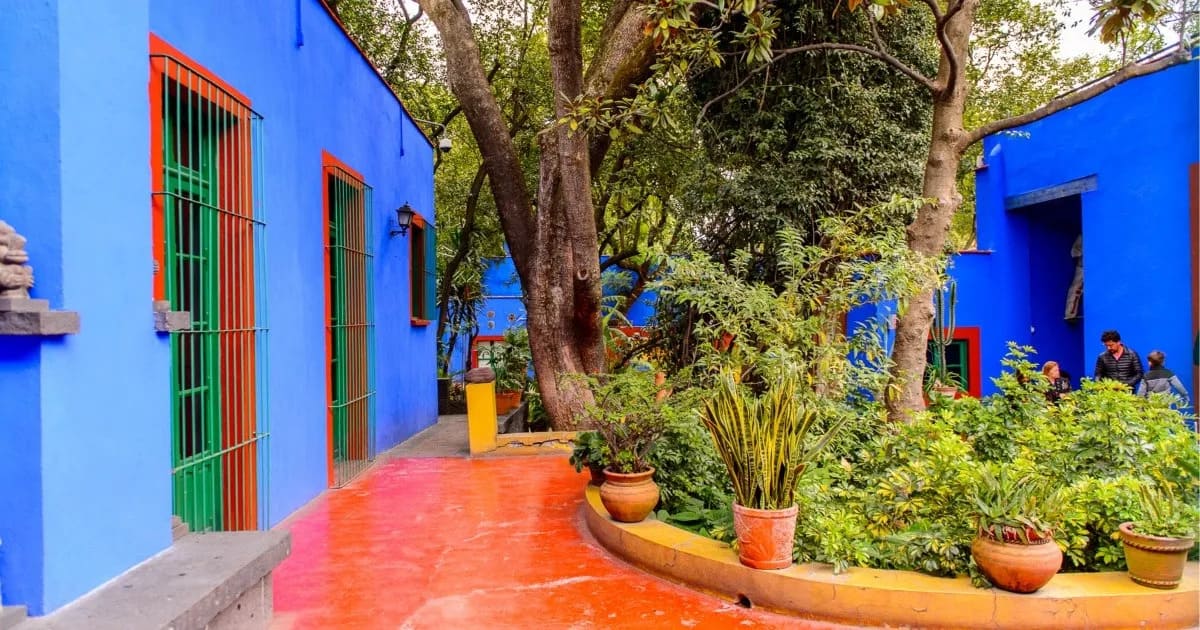
La Casa Azul, or the Blue House, takes its name from the vivid cobalt blue walls chosen by Frida Kahlo and Diego Rivera to reflect their love of Mexican culture and folk art.
Beyond its beauty, the color carries meaning. It evokes the sky and water, both essential elements in pre-Hispanic traditions.
The house became a reflection of the couple’s identity and political engagement, as well as a personal sanctuary where Frida gave life to her creativity despite adversity.
Frida Kahlo Museum Tickets and Prices
Admission to La Casa Azul is approximately 35 USD. Due to the museum’s popularity and limited capacity, booking online is strongly recommended.
This will save you time and help you avoid long queues, so you can make the most of your visit.
Where Are Frida Kahlo’s Ashes?
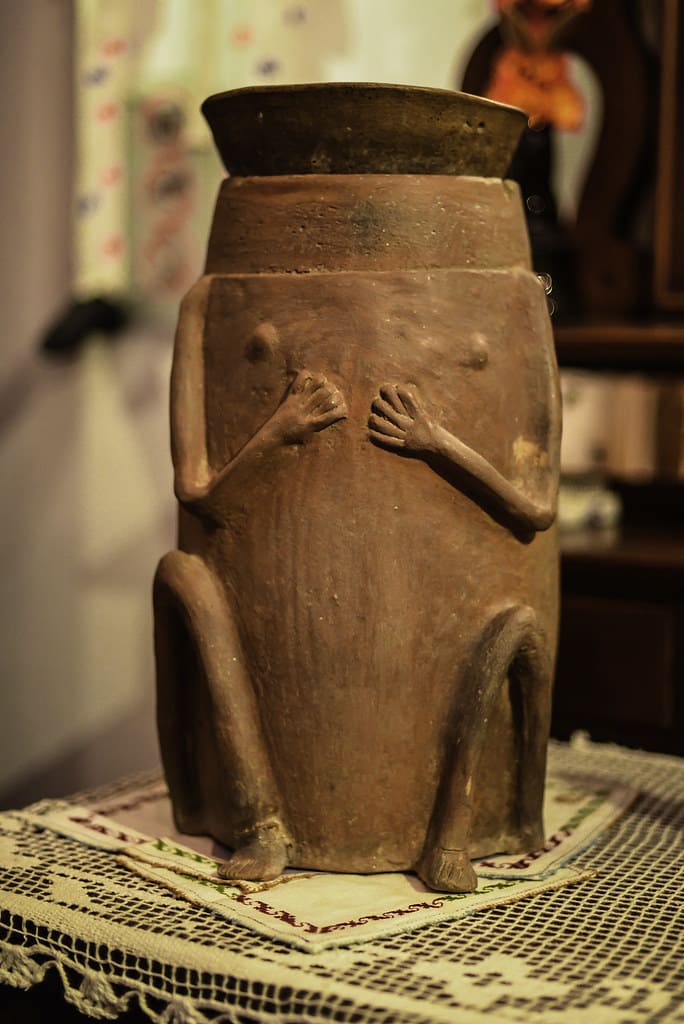
Frida Kahlo’s ashes rest at La Casa Azul, the beloved home that now serves as a museum in the Coyoacán neighborhood of Mexico City.
In accordance with her final wishes, her ashes are kept in a pre-Columbian urn placed on the desk in what used to be her studio.
Their presence in La Casa Azul highlights the unbreakable connection between the artist, her work, and her home, offering visitors a deeply personal encounter with her legacy.
Where Are Frida Kahlo’s Paintings?
Frida Kahlo’s works are held in museums and private collections around the world.
In Mexico, La Casa Azul in Coyoacán and the Dolores Olmedo Museum in Xochimilco house some of the most significant pieces from her career.
Internationally, her paintings are part of major museum collections such as the Museum of Modern Art (MoMA) in New York, the Detroit Institute of Arts, and the San Francisco Museum of Modern Art.
Her work is also regularly featured in temporary exhibitions across the globe, a testament to her lasting influence and global recognition.
Final Thoughts
A visit to La Casa Azul offers an intimate look into the life, art, and legacy of Frida Kahlo. More than a museum, it captures the rebellious spirit that defined her, inspiring visitors through her paintings, personal objects, and the atmosphere of the home she once cherished.